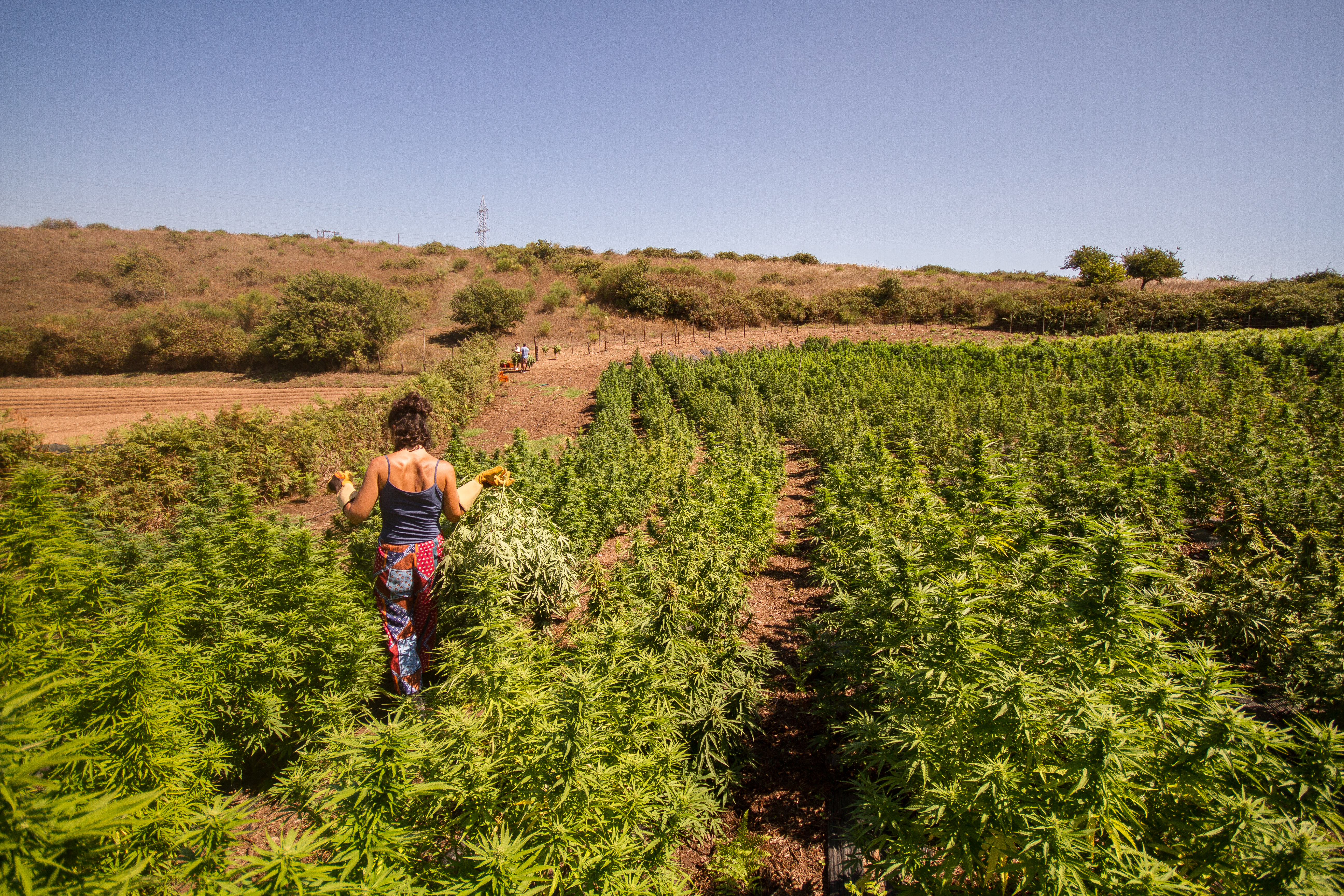
Legal Cannabis, green chemistry and agriculture
After my PhD I started an environmental rehabilitation project of a 37-hectare farm that has suffered destruction from several fires over the past 12 years.
On the 22th of August 2012 a huge tragedy occurred. A birthday party turned into a day of death; 6 people lost their lives due to a massive fire that destroyed a restaurant and several hectares of forest. It is proper to remember their names: Matteo Cucinotta, who on that accursed day was celebrating 52 years, his brother Costantino, his wife, Lucia Natoli, the latter’s mother, Caterina Maffeini, Giuseppe Buonpensiero and Cettina Scaffidi, the former farmhouse cook and waitress, respectively. All that remains is the grief of the families for the loss of their loved ones.
After that tragic event, the farm closed its activity until 2022, when I started Kernel together with my sister Bruna.
We restarted an abandoned farm by introducing the use of new crops grown with a sustainable approach.
Currently, we produce olives, apples, pears, cherries, tomatoes, zucchini and chestnuts integrated with the cultivation of legal cannabis and saffron.
We work with local markets and customers to provide goods without the use of any synthetic chemical compounds and with the lowest impact affordable. The plants in our 37-hectare farm are currently removing approximately more than 65 tons of CO2 from the atmosphere.
Legislation
The legal cannabis market in Europe is still in its early stages, with only a few countries such as Italy and Germany having legalized cannabis for medical use.
Economic research on the cannabis market in Europe has focused on topics such as the potential economic benefits of legalization, such as job creation, tax revenue and reduction of public expenditure on law enforcement. Also, the research has highlighted the potential challenges of legalization such as the impact on public health, crime, and the black market.
Each year, more than 20 million users of cannabis spend an estimate 9 billion euros on cannabis, thus making the illicit market for it the largest of its kind in the EU. Some estimates suggest that the legalization of cannabis can significantly reduce the profits of criminal organizations.
For example, a report by the RAND Europe estimates that the EU black market for cannabis is worth around €9.3 billion annually. This suggests that the illegal market is losing a significant share of the cannabis market to the legal market.
We are happy to be part of such a black market reduction through our environmental rehabilitation project!
Green Internet
Today, there are over 8 million data centers worldwide and they account for 2% of the world’s carbon emissions, that is as much as the airline industry! But it doesn’t stop there. Data Center pollution is expected to grow to 14% of the world’s carbon emissions by 2040. A massive problem, and it is only getting worse.
To address this issue, there has been a growing interest in the use of “green servers,” which are servers that are designed to be more energy efficient and have a lower environmental impact. These servers may use more efficient processors, power supplies and cooling systems, or employ technologies such as virtualization to reduce the number of physical servers needed. Additionally, some companies are using renewable energy sources, such as solar or wind power, to power their data centers.
Our eshop hosting platform is GreenGeeks. It has been designed with a maximum use, no waste of resources mindset. Every aspect of our hosting platform is built to be as energy efficient as possible. In addition to this, for every amperage we pull from the grid, they match 3 times that in the form of renewable energy via Bonneville Environmental Foundation and plant one tree for every hosting account provisioned.
 Simone Anzà, PhD — Life Science Researcher